

Letting Boys Cry Builds Emotional Strength
- Royal Sentinels Initiative
- Oct 8, 2024
- 3 min read

For generations, boys have been taught to “man up,” suppressing their emotions and refraining from tears. The concept that crying is a sign of weakness is deeply ingrained in many cultures, leading to significant long-term consequences for emotional health and mental well-being. But the truth is, crying is a natural emotional release and an important part of emotional resilience. In this article, we will explore the dangers of telling boys to “man up” and why they need to be allowed to cry.
The Problem with “Man Up” Mentality
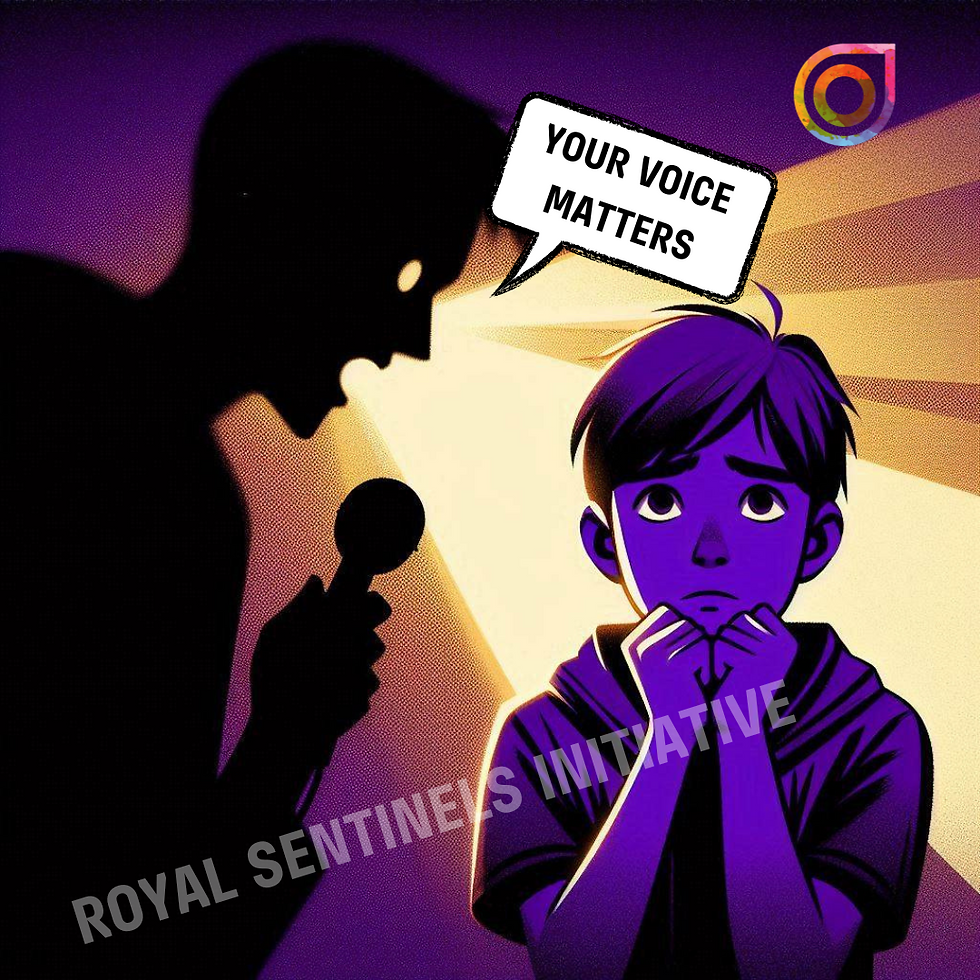
Boys are often raised with the harmful belief that showing emotions makes them less masculine. Phrases like "man up," "boys don’t cry," and "be tough" teach them to hide their vulnerability. This cultural expectation can lead to the following issues:
Emotional Suppression: When boys are discouraged from expressing emotions like sadness or fear, they tend to bottle them up. Over time, this emotional repression can lead to:
Mental Health Challenges: Boys who grow up learning to suppress emotions are more prone to anxiety, depression, and even suicidal thoughts.
Anger and Aggression: Pent-up emotions often manifest as anger, because boys feel like it’s the only emotion they are "allowed" to express.
Emotional Detachment: Boys who are constantly told to "be tough" may struggle to connect with others on a deeper emotional level, causing issues in relationships.
Mental Health Crisis Among Men: The "man up" culture has contributed to a mental health crisis among men. Men are less likely to seek help for emotional or psychological issues, often because they’ve been taught that seeking help is a sign of weakness. This reluctance to seek support is evident in global statistics, where men make up the majority of suicide cases.
Why Crying Is Essential for Emotional Health
Crying isn’t just a natural response to sadness or frustration; it serves important psychological and physiological functions:
Stress Relief: Tears, especially those brought on by emotional stress, contain stress hormones. Crying helps reduce cortisol levels, which can make individuals feel calmer and more relieved after shedding tears.
Emotional Processing: Crying allows boys (and everyone) to process difficult emotions in a healthy way, preventing those emotions from festering and potentially causing more harm down the road.
Increased Emotional Resilience: When boys are encouraged to embrace and process their emotions, they build emotional resilience. This helps them deal with life’s challenges in a healthier way.
Enhanced Empathy: Allowing boys to cry and feel vulnerable helps them develop empathy for others, enabling them to form deeper, more compassionate relationships.
Shifting the Narrative: Let Boys Cry
Here’s how we can change the narrative around boys and crying:
Normalize Emotional Expression: Parents, educators, and caregivers should emphasize that it’s okay for boys to cry. Whether they're sad, scared, or overwhelmed, expressing emotions is not just acceptable but encouraged.
Teach Emotional Literacy: Boys should be taught to identify and label their emotions from a young age. This gives them the tools they need to understand what they’re feeling and how to cope with it.
Positive Role Models: Men in leadership roles—whether in sports, entertainment, or everyday life—can help shift the narrative by publicly embracing vulnerability and showing that expressing emotions is a sign of strength, not weakness.
Create Safe Spaces: Schools, homes, and communities must create environments where boys feel safe and supported in expressing their emotions without the fear of judgment or ridicule.
The Long-Term Benefits
Allowing boys to cry and encouraging emotional expression has long-term benefits for society as a whole:
Healthier Men: Boys who grow up understanding their emotions are more likely to become men with better mental health and emotional intelligence.
Stronger Relationships: Boys who are emotionally aware build stronger personal and professional relationships, forming deeper connections with others.
A More Compassionate Society: When we teach boys that it's okay to be vulnerable, we foster a generation that values empathy and emotional understanding, which leads to a more compassionate society.
Telling boys to "man up" and hide their emotions is harmful. Crying is not a weakness; it’s a natural emotional release that leads to better mental health and stronger emotional resilience. Let boys cry, and encourage them to express their feelings. By doing so, we will raise emotionally healthy, empathetic men who are better equipped to navigate life’s challenges.
Comments